

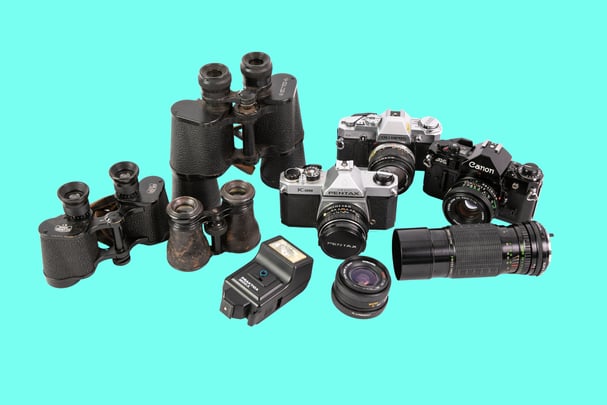
Selling broken camera equipment
Before you toss that broken camera, non-working equipment often has significant value. Learn about the entire process in our definitive guide to selling your cameras.
Is a broken camera worth anything?
Expert insight
We often purchase professional and collectible cameras even when they have faults. For example, Rolleiflex cameras sometimes arrive with seized shutters or mechanical issues. Even when non-functional, these models can often still hold value because their parts are sought after for restoration work.
Common issues we see (and value!)
Shutter failure
Expert insight
Faults like shutter failure will usually reduce value, but they do not necessarily mean an item is worthless. Depending on the severity of the fault, cameras are typically categorised as Mechanically Working or Parts / Repairs.
Lens fungus or haze
Expert insight
Issues such as haze or fungus inside a lens are particularly significant, as they can permanently damage coatings or etch the glass. In these cases, an item may be valued mainly for parts.
Dead sensors or electronics
Expert insight
Electronic problems will usually reduce value, but they do not necessarily mean an item is worthless.
Physical damage
Expert insight
If an item has significant cosmetic damage or obvious missing components, it may be categorised as Parts / Repairs earlier in the process, as its value is likely to be primarily in its remaining components.
How we value cameras for parts
Expert insight
When an item is only suitable for parts, we look at factors such as the brand, model rarity, and the condition of external components such as dials, levers, lens mounts, battery doors, and covers. If the body is cosmetically clean, it can still be useful as a donor item for restorers and enthusiasts keeping vintage cameras in working order.
A note on selling broken lenses
High-quality optics like Canon L-series retain significant parts value even with mechanical issues. See our How to Sell Camera Lenses.
What NOT to repair before selling
Expert insight
Specialist repairs can be expensive, and in many cases the cost of repair can exceed the resale value of the camera itself. Because we already handle items in all conditions, it is often better to send equipment exactly as it is, rather than paying for repairs upfront without knowing whether the value increase will justify the cost.
How to ship broken equipment safely
Expert insight
Wrap each item individually using protective padding, and place heavier items at the bottom of the box. If possible, fill empty space so items cannot move around during transit. This reduces the risk of cosmetic damage and protects delicate parts such as lenses and viewfinders.