

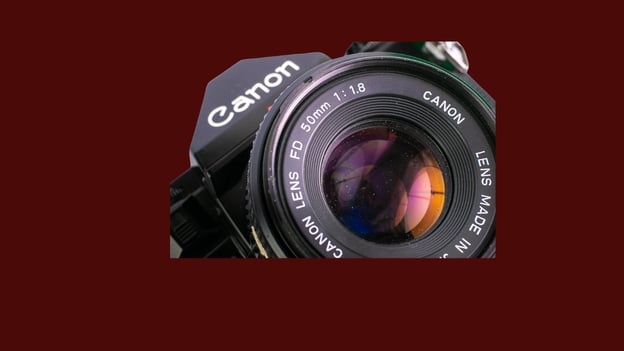
How to sell camera lenses (and is it worth it?)
Camera bodies get all the attention, but experienced photographers know that lenses are where the real investment lies, and where the real value often remains. Unlike camera bodies that rapidly become obsolete, quality lenses can remain relevant for decades. A professional lens from 20 years ago may still produce images that rival or exceed modern budget optics. This makes the used lens market both valuable and complex.
If you're selling your entire camera setup, our definitive guide to selling your cameras covers the complete process. This article focuses specifically on camera lenses.
Do camera lenses hold their value?
Expert insight
Professional lenses, particularly fast prime lenses with wide apertures, often hold their value better than consumer zoom lenses. High-quality optical glass and strong mechanical build tend to remain desirable even as camera bodies evolve.
Which lenses are worth selling?
High-value professional lenses
Expert insight
Premium lenses from brands such as Leica, Sigma, Arriflex, and Canon’s professional L-series can be particularly valuable. Fast prime lenses, for example a 50mm f/1.2, are often more desirable than standard kit zoom lenses, as they are widely used for portrait and low-light photography.
Mid-range lenses
Expert insight Mid-range lenses and kit lenses may not achieve high individual prices, but they are still useful items. They often contribute value as part of a larger collection.
Vintage manual focus lenses
Expert insight
Vintage manual focus lenses can be highly valuable, particularly those known for strong build quality or distinctive image character. Vintage lenses from brands such as Leica / Leitz Wetzlar, Taylor Hobson Cooke, P. Angenieux, Carl Zeiss, and Arriflex are some of the more desirable lenses.
If you're selling vintage lenses along with film camera bodies, our guide to vintage film camera values can help you understand the complete system's worth.
How lens condition affects value
Expert insight
Light internal dust is common and does not always significantly affect value. However, fungus, haze, or mechanical faults are more serious and can reduce the valuation, particularly if the glass has been etched or the aperture blades are affected. In these cases, a lens may be categorised as Parts / Repairs.
Learn more in our guide to selling broken camera equipment.
Lens mount compatibility and value
Expert insight
Popular mounts such as Nikon F and Canon EF often remain valuable because they can still be adapted for use on many modern DSLRs and mirrorless cameras.
What about lens adapters?
Expert insight
Yes, we buy camera accessories including adapters. Lens adapters from brands such as K&F do add value. Speed boosters from any brand, but particularly Metabones, are also good accessories to include.
Selling vs. trading in lenses
Expert insight
Private selling often involves detailed questions and close scrutiny of issues such as internal dust, haze, or fungus, which can lead to disputes. Our approach is straightforward. We assess lenses based on their condition and usability, and we can still offer value even when a lens is only suitable for parts.
How we value lenses at VCC
Expert insight
We check the focus ring and the aperture ring for smooth movement, blades for responsiveness, and the glass for internal issues such as haze, fungus, scratches, delamination, or internal debris.
Preparing your lenses for sale
Expert insight
We recommend gently removing any loose external dust using a soft lens cloth or blower, and including front and rear lens caps where possible. Wrapping any loose lenses in bubble wrap is advised so that it does not get damaged in transit. If you are unsure how to clean a lens properly, it is best not to attempt it. Camera optics have delicate coatings, and using household cloths or cleaning fluids can cause fine scratches or damage that may reduce the value. Protecting the lens carefully before sending it helps preserve its condition and avoid preventable reductions in value.