

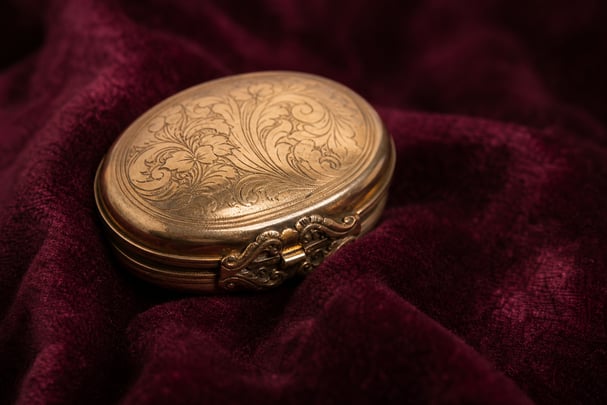
Rolled gold is made by bonding a layer of real gold onto a base metal, usually brass, using heat and pressure rather than an electrical process. The two metals are pressed and rolled together into thin sheets, which is where the name comes from, and the result is a piece that contains genuine gold, just not very much of it, and not all the way through.
It's a method that sits between solid gold and gold plating, and it has its own particular history, especially in vintage British and European jewellery.
How is rolled gold actually made?
The process starts with a sheet or block of base metal, most often brass, with a layer of gold laid over it. Heat and pressure are then used to bond the two together, before the combined metal is rolled out into thin, workable sheets that can be shaped into jewellery, watch cases or accessories.
This is quite different from gold plating, which uses an electric current to deposit a thin film of gold onto the surface of an item that's already been shaped. Rolled gold, by comparison, starts as a bonded sheet before the piece is even formed, which generally gives it a thicker, more durable gold layer than standard plating.
How much gold does rolled gold actually contain?
This is where things get a little less consistent. Gold filled jewellery, which uses a similar bonding method, has a recognised standard requiring the gold layer to make up at least 5% of the item's total weight. Rolled gold doesn't have one single, universally applied standard in the same way, so the amount of gold can vary more from piece to piece.
You'll typically find rolled gold marked with one of the following:
- RGP, short for Rolled Gold Plate
- A fraction such as 1/40 or 1/20, indicating the proportion of gold relative to the total weight
- Simply the words "rolled gold" stamped somewhere on the piece
Because there's no single fixed percentage tied to the term, two rolled gold pieces can have noticeably different amounts of actual gold in them, even if both carry similar markings.
Rolled gold, gold filled and gold plated: how do they compare?
These three terms get mixed up often, since they can look almost identical once finished. In short:
- Rolled gold and gold filled are both made by mechanically bonding a layer of gold to a base metal, which gives them a thicker, more durable gold layer than plating
- Gold plated items use electroplating to apply a much thinner gold coating, which wears through more easily over time
- Rolled gold generally has a less standardised gold content than gold filled, so it sits somewhere between the two in terms of how much actual gold is present
None of this affects how genuine the gold itself is. It simply affects how much of it is there.
Why was rolled gold so popular?
Rolled gold had its heyday from the late 19th century through to around the mid-20th century, particularly in the UK and Europe. It offered a way to produce jewellery, watch cases, cufflinks and lockets that looked like solid gold and wore considerably better than early plating methods, all at a more accessible price than the real thing.
This is why you'll often come across rolled gold in vintage collections today, including pieces passed down through family jewellery boxes. Its durability means many rolled gold items from this period have survived in good condition, even decades later.
Is rolled gold worth anything?
Rolled gold can certainly hold value, though usually not in the same way as solid or gold filled pieces. Because the gold layer is thin and tightly bonded to the base metal underneath, it isn't straightforward or cost-effective to separate and melt down purely for its gold content, unlike a solid gold ring or chain.
This means the value in rolled gold tends to come more from the piece itself, including its age, maker, design and overall condition, rather than its weight in gold. A well-preserved Victorian rolled gold locket or a vintage rolled gold watch case can still be desirable, particularly if it's in good condition or carries a recognisable maker's mark.
What this means if you're sorting through old jewellery
If you've got pieces marked RGP, "rolled gold" or even just an unclear stamp you can't quite make out, it's not something you need to work out yourself before deciding whether to send it off. Rolled gold sits alongside gold filled, gold plated and solid gold as one of several materials commonly found in vintage jewellery boxes, and each is assessed on its own merits.
Our specialists look at the material, age, condition and any maker's marks on each item individually, so pieces don't need to be sorted or identified in advance. Here's how the process works:
- You request a free postage pack or book a home collection
- Your items are sent to our team for in-house appraisal
- We provide one offer for your full collection within 7 to 14 days
- You have 60 days to decide whether to accept
- If you decline, your items are returned to you free of charge
With more than 100 in-house specialists assessing items individually, it doesn't matter whether your collection is solid gold, rolled gold, gold filled or a mix of all three. You can find out more about how the assessment works on our How It Works page.
If you've got rolled gold pieces sitting in a drawer because you weren't sure they were worth sending, requesting a free postage pack is a simple way to find out, with no obligation to accept the offer you receive.