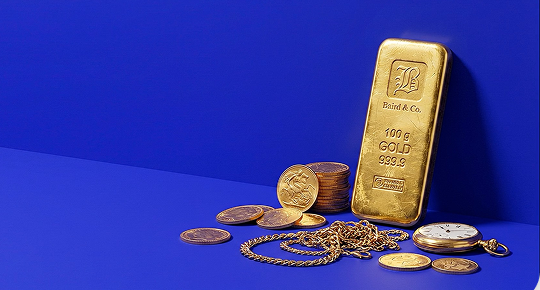
What is the definition/meaning of gold bullion?
Gold bullion is physical gold which is very high purity - over 99% pure. It's held purely for it's metal content (rather than for wearing it or for display).
It usually comes in the form of bars, ingots or specially minted coins which are produced to a known weight and purity. This ensures the value can be calculated almost entirely from the metal itself, with little value added for design or craftsmanship.
This is what sets gold bullion apart from gold jewellery, where a jewellery piece's worth can also reflect things like the maker, the era it came from, or the skill that went into shaping it.

Gold bars, coins and where the line gets drawn
Gold bullion comes in two main forms, bars and ingots.
Bars and ingots are produced by accredited refiners and stamped with details such as weight, purity and a unique serial number, leaving little ambiguity about what you're holding. Bullion coins on the other hand are minted specifically for investors, struck in high purity gold rather than the metal used in everyday circulating currency.
It's worth separating bullion coins from collectable or historic gold coins too. A bullion coin's worth comes almost entirely from its gold content, whereas an antique or rare coin might carry significant extra value tied to its age, scarcity or history. This can be regardless of how much gold it actually contains.
How pure is gold bullion?
Most gold bars are produced to 999.9 fine (999.9% pure), making them about as close to pure gold as you'll find anywhere.
Elements to remember:
-
Bullion coins vary a little more.
-
Some are struck in the same near-pure standard whereas others such as those traditionally made with a harder wearing alloy sit closer to 22 carat.
-
The slightly lower purity in these cases is a deliberate choice
-
A small amount of alloy makes a coin more resistant to scratching and everyday handling.
What sets bullion's value apart from jewellery?
A bar or coin's price tracks the gold market about as closely as anything can.
Multiply its weight by its purity, factor in the current market price and you're left with the bulk of what it's worth, plus a modest premium that covers minting and distribution costs. Gold Jewellery works differently, since two pieces with identical weight and purity can still be priced quite differently depending on factors that have nothing to do with the metal itself.
Why accreditation matters
Reputable bullion comes from refiners recognised by major industry bodies, including those on the London Bullion Market Association's approved list. This accreditation, paired with the serial numbers and assay marks stamped onto each bar, is what allows buyers and sellers to trust a piece's stated weight and purity without needing to test it themselves every time it changes hands.
Does bullion avoid VAT in the UK?
Often, yes, though the rules for selling old gold are specific.
Under HMRC guidance, gold counts as exempt investment gold when it's supplied as a bar or wafer of at least 995 thousandths purity in a weight accepted by the bullion markets, or as a coin that meets particular age, purity and pricing criteria set out in VAT Notice 701/21A. Many well known bullion coins fall within this definition, while gold jewellery and lower purity items generally don't.
This is general information rather than tax advice, and rules around VAT and any related capital gains considerations can be detailed and subject to change, so it's worth checking with HMRC or a qualified adviser for anything specific to your own situation.

Why people hold bullion in the first place
Bullion appeals to a particular kind of buyer because:
- it's a tangible, easily understood asset
- it's compact relative to it's value
- doesn't rely on a company's performance
- it holds a place in personal / national reserves
Selling Gold Bullion
Inherited bullion, an old investment that's simply been forgotten about, or coins picked up years ago and never really used, all get assessed the same way once they reach us. Weight and purity are checked properly, whatever form the gold takes, before a single offer is put together covering your full collection.
Arranging this couldn't be more straightforward. Order you free postage label or arrange a Royal Mail collection at a time that suits you, for your items go straight to our specialists for proper appraisal. You'll have a complete offer in your hands within a fortnight or so. Not interested in selling after all? Everything goes back to you, no charge involved.
Our How It Works page sets out each stage in more detail, and our FAQs cover plenty of the smaller questions people tend to ask before sending anything in.
Bullion was made to be valued by weight and purity from the start, so finding out what yours comes to is rarely complicated.