

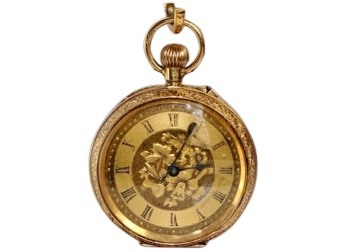
Yes, gold is a metal, and a fairly textbook one at that. It's a chemical element with the symbol Au and the atomic number 79, sitting in the transition metals section of the periodic table. Unlike many materials people sell or wear, gold in its purest form is nothing more than gold atoms, with no other elements mixed in.
What's more interesting than the simple yes is what actually makes gold count as a metal in the first place, and why those properties matter long after a piece of jewellery has been made.
What actually makes something a metal?
Scientists generally classify metals by a shared set of physical and chemical traits, and gold demonstrates nearly all of them clearly:
- Malleable, meaning it can be hammered or pressed into shape without breaking, which is why gold can be worked into fine, detailed jewellery
- Ductile, meaning it can be drawn out into thin wires, a property gold shares with very few other materials to such an extreme degree
- Lustrous, with that distinctive shine most people instantly recognise
- A good conductor of heat and electricity, a property that's part of why gold turns up in some electronics
- Solid at room temperature, with a melting point of around 1,064 degrees Celsius
Gold doesn't just meet these criteria, it's often used as the standard example of a metal precisely because it displays these traits so consistently.
Where does gold sit on the periodic table?
Gold belongs to Group 11 of the periodic table, alongside copper and silver. These three metals share a column for a reason, since they have similar atomic structures that give them comparable properties, including high conductivity and malleability. Historically, this is also why copper, silver and gold became known as the "coinage metals," having all been used to mint currency at different points in history.
You can see gold's exact position, alongside its full set of physical properties, on the Royal Society of Chemistry's periodic table, if you'd like to look into the science further.
Why gold is considered chemically "noble"
One of gold's most distinctive traits isn't just that it's a metal, but how unreactive it is. Gold doesn't react with air, water, alkalis or almost any acid, which is part of why it's classed among the so-called noble metals. This chemical stability is the reason gold doesn't tarnish, rust or corrode in the way iron, copper or even silver can over time.
It's also why gold jewellery passed down through generations can still look much as it did decades, or even centuries, earlier. The metal simply doesn't break down the way many others do.
Is the gold in jewellery pure metal?
Not usually, no. Pure, 24 carat gold is the closest thing to elemental gold you'll find in jewellery, but it's also quite soft, which makes it impractical for items that need to withstand daily wear. For that reason, most jewellery is made from a gold alloy, where pure gold is mixed with other metals such as copper, silver, zinc or palladium to improve strength and, in some cases, change its colour.
This is why carat markings such as 9ct, 18ct or 22ct matter. They tell you what proportion of the metal is pure gold and what proportion is made up of other metals, even though the whole piece will usually be described simply as "gold."
Is gold a precious metal as well as a metal?
Yes, and the two terms aren't quite the same thing. "Metal" is a broad scientific classification based on physical and chemical properties, while "precious metal" is more of an economic term, used for rare metals that hold significant value, typically gold, silver, platinum and palladium. Gold qualifies as both, being a genuine metal by every scientific measure, and one of the most economically significant metals in the world.
What this means when it comes to value
Gold's chemical stability is part of why old or inherited jewellery can still be properly assessed today, even after decades in a drawer. Because gold doesn't corrode or break down, its weight and purity remain just as identifiable as they were the day it was made, regardless of how worn, tarnished-looking or old a piece might appear on the surface.
If you've got jewellery you're unsure about, our specialists assess every item individually based on its actual gold content, not its age or appearance.
With more than 100 in-house specialists and a long track record on Trustpilot, the process is built to give every piece a proper, individual assessment.
Gold's stability as a metal is part of what makes it worth holding onto, but if yours has been sitting unused, booking a home collection is a simple way to find out what it's worth now.